


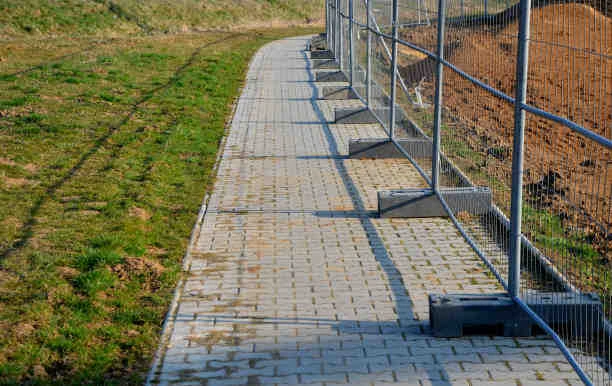
1. **Failure to Plan Thoroughly:**
One of the most common DIY fence mistakes is inadequate planning. Skipping this crucial step can lead to issues with property lines, materials, and design. Before starting your project, carefully measure and mark the fence location, and consult local regulations and utility companies to avoid any potential issues.
2. **Choosing the Wrong Materials:**
Selecting the right materials is essential for the longevity and appearance of your fence. Opting for low-quality or inappropriate materials can lead to premature decay and costly repairs. Research your options, considering factors like weather resistance, maintenance requirements, and local aesthetics.
3. **Ignoring Local Regulations:**
Fencing regulations can vary by location and might dictate fence height, style, and placement. Failing to adhere to these rules can lead to legal problems and costly adjustments. Contact your local zoning department or homeowners" association to ensure compliance with the regulations.
4. **Incorrect Post Installation:**
Fence posts are the backbone of your project, and incorrect installation can undermine the entire structure. Common mistakes include not digging deep enough holes, not using enough concrete, or failing to set posts in a straight line. Use the appropriate depth and secure posts with proper bracing and concrete for stability.
5. **Inconsistent Measurements:**
Inconsistent measurements can result in uneven or poorly aligned fencing, which detracts from the appearance and function of your project. Take time to measure and mark your fence line accurately, using string lines and stakes to ensure uniformity.
6. **Neglecting Proper Maintenance:**
A common mistake is assuming that once the fence is up, your work is done. Regular maintenance is necessary to ensure its longevity. Neglecting maintenance, such as painting, staining, or replacing damaged sections, can result in costly repairs down the road.
7. **Lack of a Solid Foundation:**
A fence needs a strong foundation to withstand the elements. Insufficient concrete, gravel, or base support can lead to sagging or leaning posts. Ensure a solid foundation that keeps your fence level and stable.
8. **Poor Gate Design and Placement:**
Gates are often the weakest point in a fence and can be subject to wear and tear. Failing to construct them with proper hinges, latches, and reinforcements can lead to sagging gates or difficulty opening and closing them.
9. **Inaccurate Posthole Spacing:**
Uneven or incorrect posthole spacing can result in a wavy or unattractive fence line. Carefully measure and space your posts according to your fence design and the selected materials.
10. **Haste Makes Waste:**
Rushing through a DIY fence project can lead to a multitude of mistakes, from crooked posts to inconsistent heights. Take your time, follow the instructions, and don"t cut corners.
Conclusion
DIY fence projects can be a fulfilling and cost-effective way to enhance your property. By avoiding these common mistakes and investing time in planning, careful execution, and ongoing maintenance, you can ensure a sturdy, attractive, and long-lasting fence that adds value and charm to your home. Remember that proper planning and attention to detail are the keys to a successful DIY fencing project.
Your home is not just a place to live; it"s an expression of your personality and style. One of the most exciting aspects of homeownership is choosing the architectural style that best reflects your t...

Selecting the right architect is a pivotal step in ensuring the success of your construction project, whether it"s a commercial venture or a home improvement project. Architects play a crucial role in...

Architectural design is a complex and creative process that transforms ideas and concepts into tangible structures that shape our built environment. Whether it"s a stunning skyscraper, a sustainable h...

Embarking on an architectural project, whether it"s designing your dream home, renovating a commercial space, or constructing a public building, demands meticulous financial planning. Budgeting is a c...

In an era where environmental concerns are at the forefront of our global consciousness, the concept of sustainable architecture has gained significant traction. Sustainable architecture, often referr...
Embarking on a home improvement project can be an exciting but challenging endeavor. When it comes to significant changes, two primary options often come to mind: renovating your existing home or buil...
Sign up to start winning an unlimited amount of jobs near you.


 Electrician
Gas Engineer
Electrician
Gas Engineer


Send more enquiries and explore your options
Increasing the number of potentials leads for you!
Have more control and flexibility over your finances!