


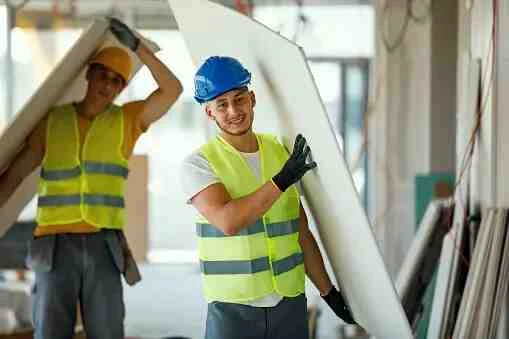
**The Power of Cross-Industry Collaboration**
1. **Diverse Perspectives**: Cross-industry collaboration allows professionals from various sectors, such as technology, design, and manufacturing, to come together. Each industry brings unique perspectives and skills to the table. For example, tech experts may offer innovative solutions for data analysis, while designers can provide insights into aesthetic and ergonomic considerations.
2. **Technological Advancements**: With the rapid pace of technological change, cross-industry collaboration can help construction projects stay at the forefront of innovation. Partnering with tech companies, for instance, can lead to the integration of IoT (Internet of Things) devices, AI (Artificial Intelligence), and BIM (Building Information Modeling) into construction projects, making them more efficient and sustainable.
3. **Sustainability and Environmental Concerns**: Collaborating with industries focused on sustainability and environmental conservation can lead to greener construction practices. Sharing knowledge with renewable energy companies, recycling experts, or ecologists can result in innovative solutions that reduce the carbon footprint of construction conversion projects.
4. **Cost-Effective Solutions**: Cross-industry collaboration can also lead to cost-effective solutions. For example, working with logistics and supply chain experts can streamline material procurement, reduce wastage, and optimize transportation, ultimately saving both time and money.
**Case Studies: Cross-Industry Success Stories**
1. **3D Printing and Construction**: Collaboration between the construction industry and 3D printing technology companies has led to the development of large-scale 3D printers capable of constructing entire buildings. This innovation has the potential to significantly reduce construction time and material waste.
2. **Aerospace and Construction**: The aerospace industry"s expertise in precision engineering and lightweight materials has been leveraged to create stronger, more durable building components. This has led to the development of lightweight, earthquake-resistant structures that can be assembled quickly.
3. **Medicine and Construction**: The healthcare industry"s knowledge of infection control and air quality has been applied to improve indoor air quality in construction projects. This collaboration has become especially vital during the COVID-19 pandemic, where the importance of clean and safe indoor spaces has been highlighted.
**Challenges of Cross-Industry Collaboration**
While cross-industry collaboration offers immense benefits, it comes with its own set of challenges:
1. **Cultural Differences**: Industries have their own distinct cultures and terminologies, which can lead to misunderstandings. Effective communication is key to overcoming these barriers.
2. **Intellectual Property Concerns**: Collaborating industries often have concerns about sharing intellectual property. It"s essential to establish clear agreements to address these issues.
3. **Coordination and Alignment**: Different industries may have varying timelines and priorities. Ensuring alignment and coordination can be challenging but is crucial for successful collaboration.
**Conclusion**
Cross-industry collaboration in construction conversion projects is not just a buzzword; it"s a fundamental strategy for addressing the challenges and complexities of modern construction. By harnessing the expertise of multiple sectors, construction professionals can develop innovative, sustainable, and cost-effective solutions that lead to successful project outcomes. Embracing collaboration is not just a choice; it"s a necessity for the construction industry to thrive in the 21st century and beyond.

Architects and interior designers are two key players in the world of design and construction. While they have distinct roles, their collaboration is often the secret behind the creation of stunning a...
The built environment is not limited to the confines of a structure"s walls. It extends to the surrounding outdoor spaces, which play a crucial role in defining the aesthetics, functionality, and over...
In the world of construction and design, two key players hold the keys to creating safe, innovative, and aesthetically pleasing structures: structural engineers and architects. Together, they form a p...

Light is not merely a functional element in architecture; it"s a dynamic and powerful tool that can transform spaces, enhance aesthetics, and influence human emotions. In the realm of architectural de...

In the pursuit of a sustainable future, architects are emerging as environmental stewards, shaping green building projects that transcend mere construction and instead, aim to harmonize with nature. Y...
The construction industry is a complex web of professionals, each with a unique role to play in bringing architectural visions to life. Among these key players, architects and contractors stand out as...
Sign up to start winning an unlimited amount of jobs near you.


 Electrician
Gas Engineer
Electrician
Gas Engineer


Send more enquiries and explore your options
Increasing the number of potentials leads for you!
Have more control and flexibility over your finances!